
Freshness · 5 min read
Why Cold-Chain Timing Matters
Fresh produce remains biologically active after harvest. Managing heat and moisture through every handover helps preserve condition and marketable life.
01
The clock starts at harvest
Once harvested, fruit and vegetables continue to respire and lose moisture. Heat speeds many processes linked to softening, wilting, and quality loss. Shade, gentle handling, and timely movement to the packhouse are therefore part of the cold chain—not steps before it.
FAO guidance describes temperature management as one of the most effective tools for extending the shelf life of horticultural produce. Rapid removal of field heat, where appropriate for the crop, helps the rest of the system work effectively.
02
Pre-cooling is crop-specific
Forced air, room cooling, hydro-cooling, vacuum cooling, and icing are different tools, not interchangeable solutions. The right method depends on the commodity, packaging, water tolerance, volume, and available facilities.
Colder is not always better. Some tropical and subtropical crops are sensitive to low temperatures. The handling plan should use a safe range for that specific product and maturity stage.
03
Airflow matters as much as set-point
A cold-room display may show the desired air temperature while produce in the centre of a tightly packed pallet remains warm. FAO guidance recommends leaving space for air circulation and checking commodity temperature rather than relying only on surrounding air.
Carton vents should remain aligned, pallets should not block airflow, and vehicles should be cooled before loading. These small operational choices influence how evenly a load reaches and maintains its target condition.
04
Protect every handover
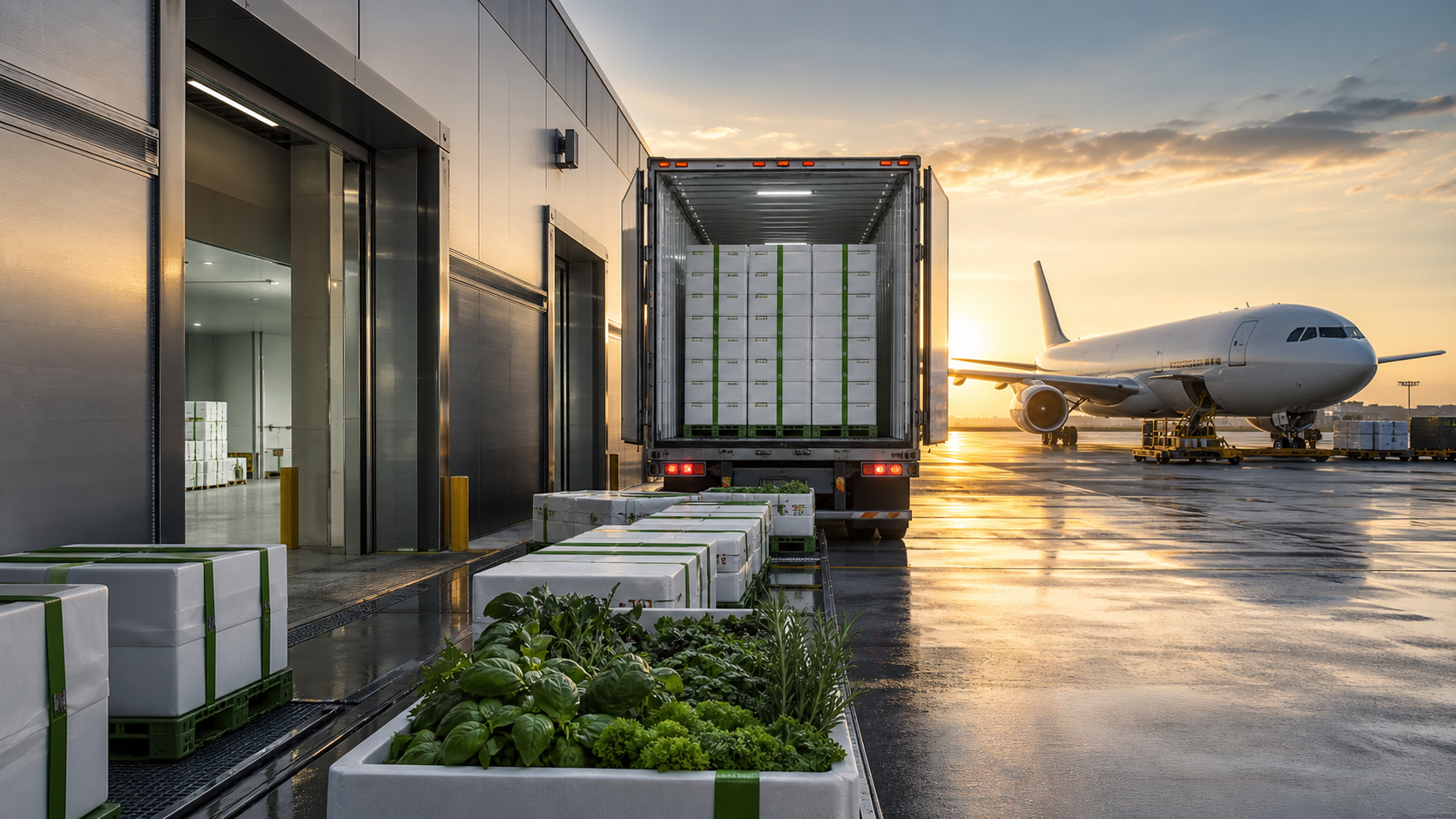
The weakest point may be a warm loading area, delayed collection, an open vehicle door, or a long transfer between facilities. A useful cold-chain plan assigns times, temperatures, and responsibility at each change of custody.
- Harvest to shade or packhouse
- Sorting and packing to pre-cooling
- Cold room to refrigerated vehicle
- Vehicle to airport or port handling
- Arrival handling by the importer
05
Questions buyers should ask
Ask how quickly the crop is cooled, which method is used, whether product temperatures are recorded, how pallets are ventilated, and what happens during a delay. For mixed loads, confirm that the crops can safely share the same temperature and atmosphere.
Official sources
- FAO: Post-harvest Management of Horticultural Produce
- FAO: Manual for the Preparation and Sale of Fruits and Vegetables
Requirements vary by product and destination. Confirm current conditions with the relevant authorities before shipping.